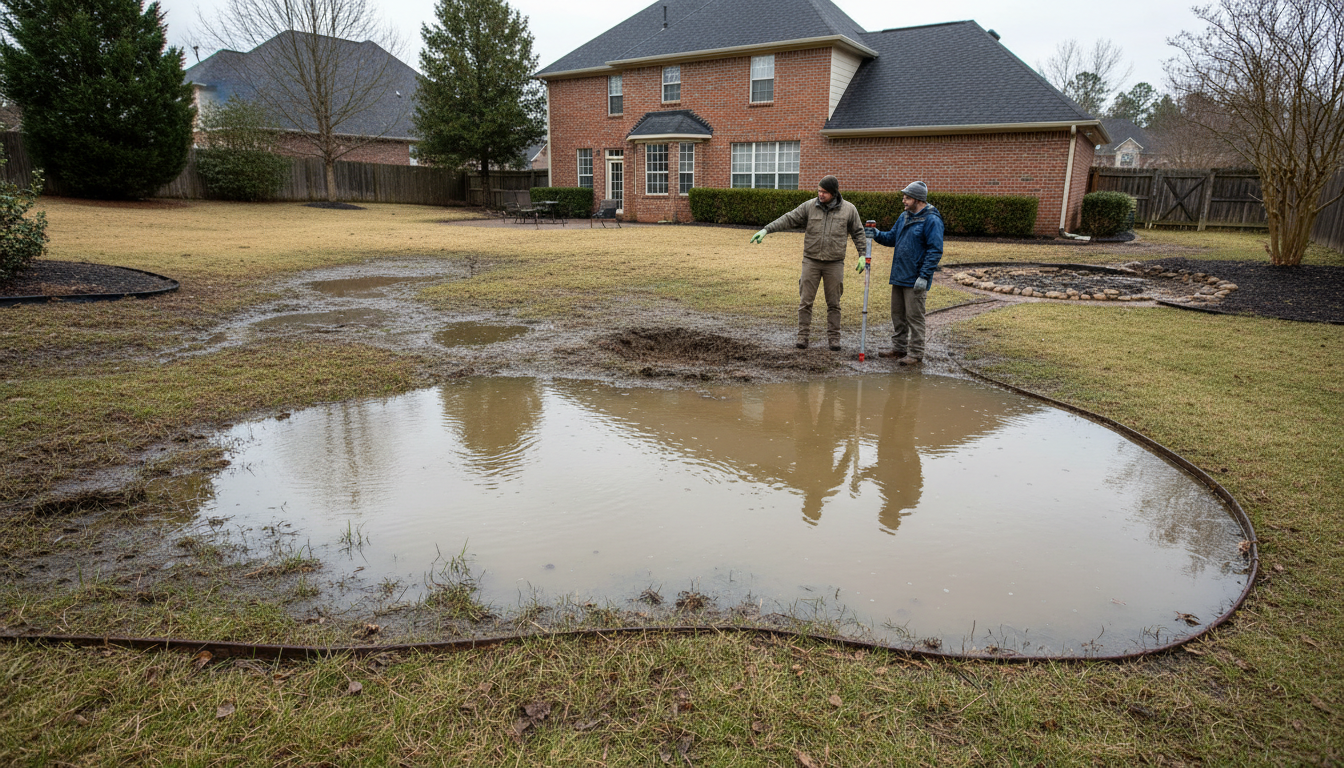
Core aeration and adding compost are the primary methods for how to fix standing water in yard clay soil because they improve soil structure and drainage. Homeowners can also install French drains or regrade the lawn to redirect excess water; additionally, planting cover crops and using liquid soil conditioners can alleviate compaction over time.
Walking across your lawn after a Sumner County rainstorm often feels more like navigating a marsh than enjoying a backyard. For Gallatin homeowners, that stubborn standing water is rarely a simple drainage issue. It is a direct consequence of the heavy, compacted clay soil that defines our local landscape. Left unaddressed, these stagnant pools drown your fescue, attract pests, and can even compromise your home foundation. A healthy landscape requires more than just surface treatments; it demands a foundation that can breathe and drain properly. In this guide, we will explore professional strategies to transform your soggy lawn. We will cover everything from core aeration and soil amendments to advanced drainage solutions like French drains and rain gardens. You will learn how to master your property water management and restore the long term health of your turf.
Why Your Gallatin Yard Holds Standing Water: The Sumner County Clay Problem
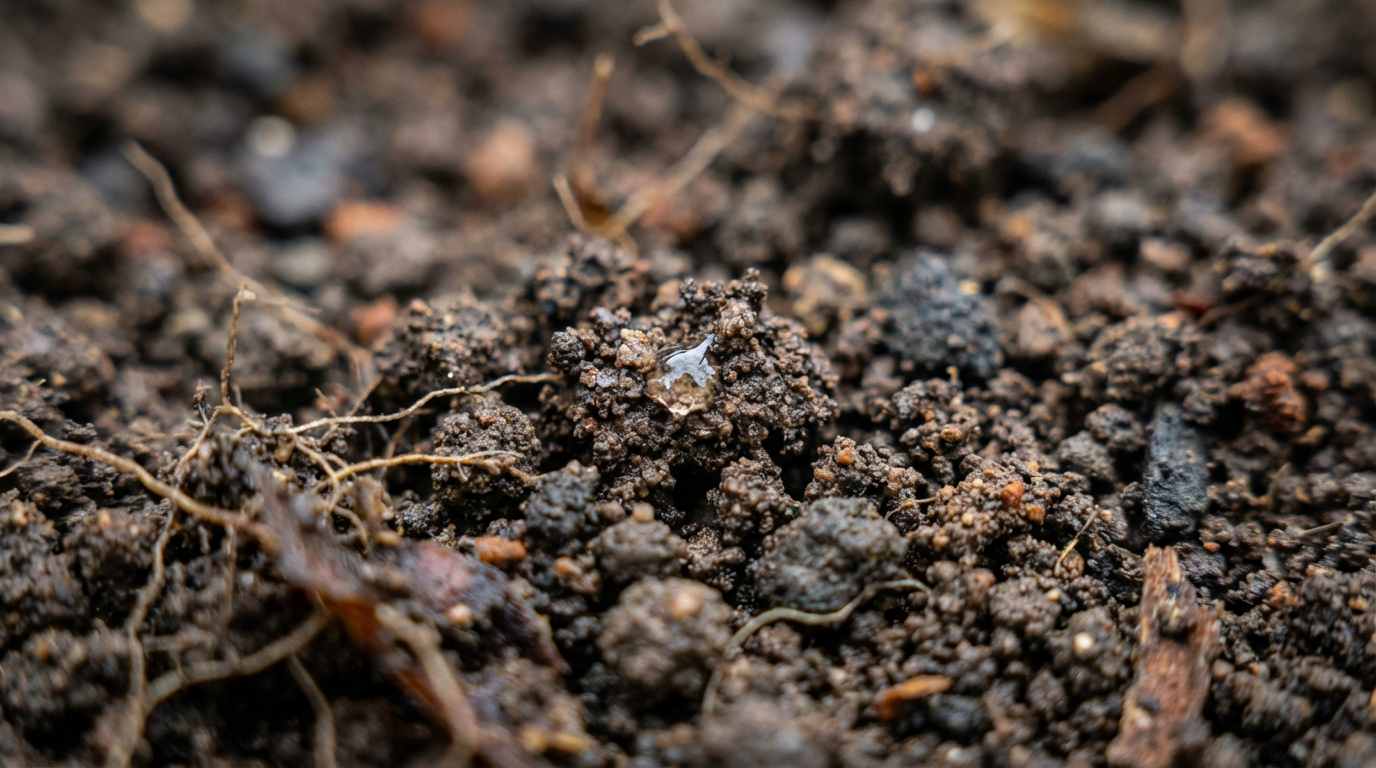
Middle Tennessee is famous for its rolling hills, but homeowners in Gallatin and Hendersonville know it for something less scenic: heavy red clay. Understanding the geological reality of Sumner County is the first step in learning how to fix standing water in yard clay soil. This soil is composed of microscopic, flat particles that resemble tiny plates. Unlike sand, which has large, irregular grains that leave space for water to flow, these clay plates stack tightly together. When they get wet or experience foot traffic, they compact into a dense, waterproof barrier that effectively seals off the ground.
There is a significant difference between surface pooling and deep saturation. Surface pooling occurs when the very top layer of soil is so compacted that rain cannot even penetrate the surface, leading to immediate puddling. Deep saturation, on the other hand, happens when water enters the soil but hits an impenetrable clay shelf a few inches down. This creates a spongy effect where the lawn stays soggy for days after the rain has stopped because the water has nowhere to go.
The problem is often worse in newer Sumner County developments. During construction, builders frequently strip away the thin layer of permeable topsoil to level the lot. This leaves the home and lawn sitting directly on the heavy subsoil clay. Without that topsoil buffer to absorb initial rainfall, your yard essentially functions like a ceramic basin. It traps every drop of water on the surface, leading to the drainage headaches common in our local neighborhoods.
Signs Your Soggy Lawn Is More Than Just a Temporary Nuisance
Recognizing when your lawn has reached a breaking point is essential before you investigate how to fix standing water in yard clay soil. In Gallatin, a healthy lawn should be able to process a typical Middle Tennessee thunderstorm relatively quickly. If you still see puddles or visible shimmering on the surface more than 24 hours after the rain stops, you are likely dealing with a drainage failure rather than temporary saturation.
Specific indicators often appear in the turf itself. Watch for areas where your fescue begins to yellow or thin out, often replaced by opportunistic moss that thrives in the damp, heavy environment. If walking across your yard feels like stepping on a wet sponge, or if your boots leave deep, muddy impressions long after the storm has passed, your soil is dangerously compacted.
Homeowners often ask if standing water is truly bad for grass. The answer is a definitive yes. Fescue roots require oxygen to survive; when they are submerged for extended periods, they effectively drown. This weakened state leaves the lawn highly susceptible to Brown Patch fungus, a devastating local disease that spreads rapidly in our humid Tennessee summers. Catching these signs early is the only way to save your lawn from total root rot and the need for complete renovation.
Step 1: Core Aeration to Relieve Clay Soil Compaction

Addressing soil compaction is the primary strategy when learning how to fix standing water in yard clay soil. Core aeration involves using a mechanical aerator to pull small, cylindrical plugs of soil and thatch out of the ground. By physically removing these cores, you create thousands of small voids that allow the surrounding heavy clay to expand and loosen. These openings serve as direct channels for air, nutrients, and water to bypass the compacted surface and reach the root zone, where they are needed most.
For homeowners in Gallatin, timing is critical. Since most local yards feature tall fescue, the ideal window for aeration and overseeding is the fall, typically between September and October. This allows the grass to recover and roots to deepen during the cooler months. A secondary window exists in early spring, though it carries a higher risk of disturbing pre-emergent weed barriers.
You may encounter marketing for liquid aerators that promise to dissolve clay without the mess of soil plugs. While these products can help slightly with water penetration, they are rarely a complete solution for the dense, stubborn red clay found in Sumner County. Mechanical core aeration provides the physical displacement necessary to truly change the soil’s structure. Without removing physical mass, the plate like particles of our local clay will simply remain tightly packed, continuing to trap water on the surface.
Step 2: Amending Soil Structure with Organic Matter and Compost
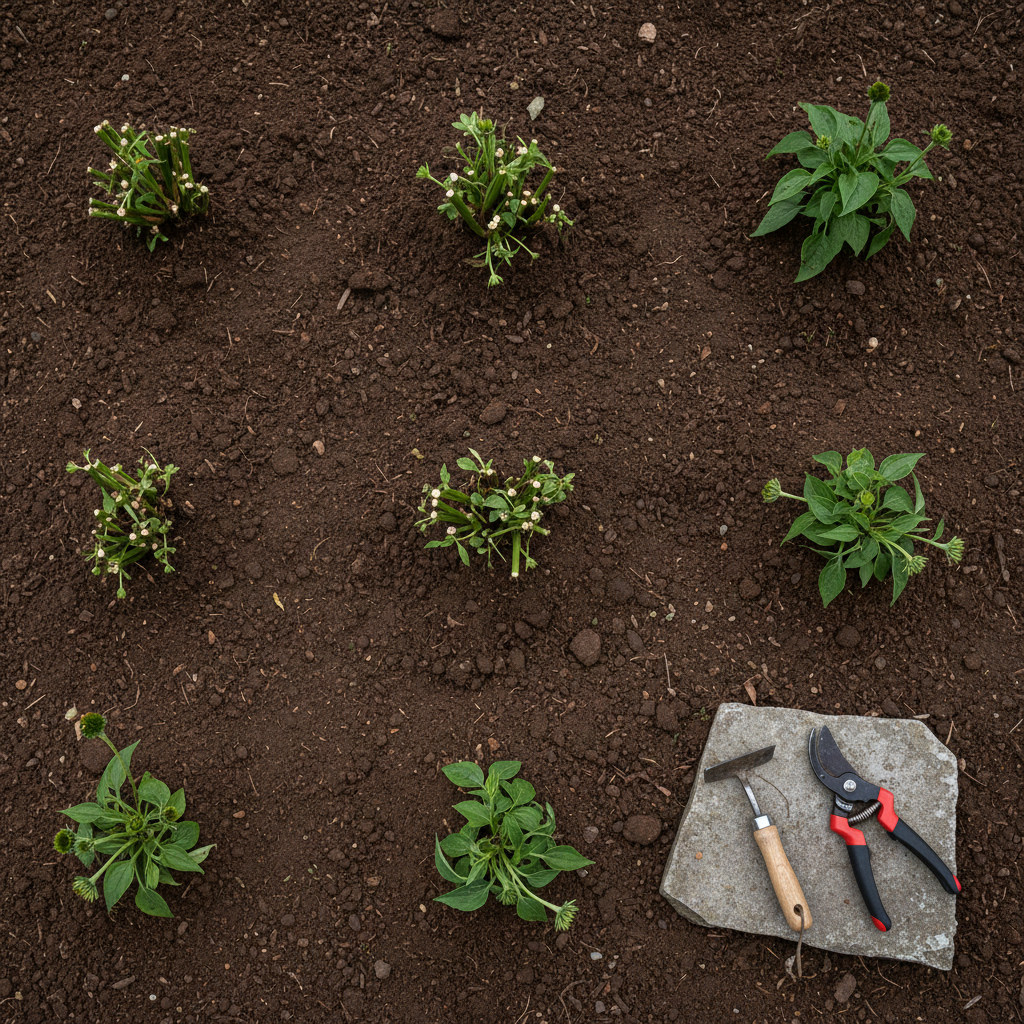
While aeration opens the door, adding organic matter is how you truly break down clay soil fast. After pulling plugs, you should top-dress the lawn with a layer of high-quality compost. This material filters into the newly created holes and begins a process called flocculation. In this chemical and biological reaction, the microscopic clay particles begin to clump together into larger aggregates. These larger clumps create macro-pores, which are bigger gaps in the soil that allow water to move vertically through the ground instead of sitting on top.
Many Gallatin homeowners ask about using gypsum for clay soil. While gypsum can improve drainage in sodic soils (soils with high sodium levels), it rarely provides the structural change needed for the typical acidic red clay of Sumner County. Compost is a far more reliable amendment because it feeds the beneficial microbes that keep soil loose and productive.
Be careful not to simply dump sand on your lawn in hopes of improving drainage. If sand is mixed with heavy clay without sufficient organic matter, it often creates a dense, concrete-like substance that makes standing water even worse. For the best results, integrate this top-dressing into your annual routine for aeration and overseeding. This ensures the amendment reaches the root zone and helps your yard better manage the heavy rains common in Middle Tennessee.
Step 3: Managing Surface Water with French Drains and Dry Wells
When aeration and compost amendments cannot keep up with heavy Tennessee rainfall, structural interventions become necessary to protect your property. A French drain is one of the most effective ways to address how to fix standing water in yard clay soil. This system consists of a sloped trench filled with clean gravel and a perforated pipe. As water moves through the soil, it follows the path of least resistance into the gravel and pipe, which carries the water safely away from your foundation to a designated discharge point.
In some Gallatin neighborhoods, property lines or local regulations make it difficult to daylight a drainage pipe toward the street or a nearby creek. In these cases, a dry well is a viable alternative. This is a large, underground basin that collects runoff and holds it, allowing the water to slowly dissipate into the deeper soil layers over time rather than pooling on your turf.
Because many lots in Sumner County feature natural slopes, you might also consider a swale. A swale is a shallow, broad channel lined with grass or decorative river rock. Unlike a buried pipe, a swale works with your yard's existing topography to guide surface water toward a safer exit. It provides a functional, natural looking solution that prevents large volumes of water from rushing toward your home during a typical summer downpour.
Native Rain Gardens: A Beautiful Solution for Low Spots
If mechanical drainage systems like French drains aren't the right fit for your property's layout, a native rain garden offers a biological alternative. These gardens are shallow, intentional depressions planted with species specifically adapted to Tennessee's cycle of heavy rain and summer heat. For Gallatin landscapes, plants like Joe Pye Weed, Cardinal Flower, and Swamp Milkweed are ideal choices because they tolerate both "wet feet" and temporary drought.
Unlike standard turf grass, these native perennials feature deep, aggressive root systems that can reach several feet underground. These roots act like natural drills, physically punching through dense clay layers and creating permanent channels for water to reach the deeper subsoil. Over several seasons, this process significantly improves natural infiltration. Instead of a muddy eyesore, you create a self-sustaining habitat that manages runoff effectively. This natural method is one of the most aesthetically pleasing ways to address how to fix standing water in yard clay soil while supporting local pollinators.
Redirecting Downspouts and Correcting Grade
Often, the primary culprit for soggy foundations in Sumner County is a downspout that terminates too close to the home. In our heavy clay soil, a single downspout can discharge hundreds of gallons during a storm, quickly saturating the ground and causing water to back up against your foundation. To effectively address how to fix standing water in yard clay soil, you should extend these downspouts at least 5 to 10 feet away from the house. Directing this concentrated flow toward a naturally lower area or a drainage swale prevents the clay from becoming a muddy slurry right at your doorstep.
Poor grading is another common structural issue found in Gallatin neighborhoods. A negative grade occurs when the land slopes toward your home, trapping moisture against the masonry. For a yard to drain properly, the ground should drop at least six inches within the first ten feet from the foundation. If you notice pooling near the house, you may need to regrade the area by adding soil to create a positive slope. This ensures that gravity moves water away from the structure before it has a chance to settle and invite issues like Brown Patch fungus in the surrounding turf.
Maintaining a Healthy Fescue Lawn in Wet Conditions
Maintaining a lawn on Sumner County clay requires a disciplined approach to maintenance, especially during our rainier months. The most immediate rule for Gallatin homeowners is to stay off the turf when it is saturated. Operating a heavy lawnmower on soggy ground causes rutting, which creates permanent depressions where water will pool in the future. Even worse, the weight of the mower crushes those vital air pockets you worked so hard to create through core aeration, undoing your progress in learning how to fix standing water in yard clay soil.
Adjusting your tall fescue mowing height is another long term biological solution. We recommend keeping your grass between 3.5 and 4 inches. Tall blades above the surface correlate directly with deep, robust root systems beneath it. These deep roots act as a natural tiller, pushing through clay layers and creating microscopic channels that improve soil porosity. By maintaining a taller canopy, you also protect the soil surface from the heat of the sun, which prevents the clay from baking into a hard, impermeable crust after a rain event. This consistent care, combined with seasonal aeration and overseeding, ensures your lawn remains resilient against Brown Patch fungus and drainage issues.
Managing the heavy clay soil common in Gallatin takes patience and the right drainage strategy. Whether you choose to install a French drain or focus on soil amendments, the goal is to protect your foundation and keep your lawn healthy. If you find these drainage projects overwhelming or simply want expert help to ensure the job is done right, we are here to support you. You can read more about our team to see how we approach local landscaping challenges; we are always happy to help you reclaim your yard.