
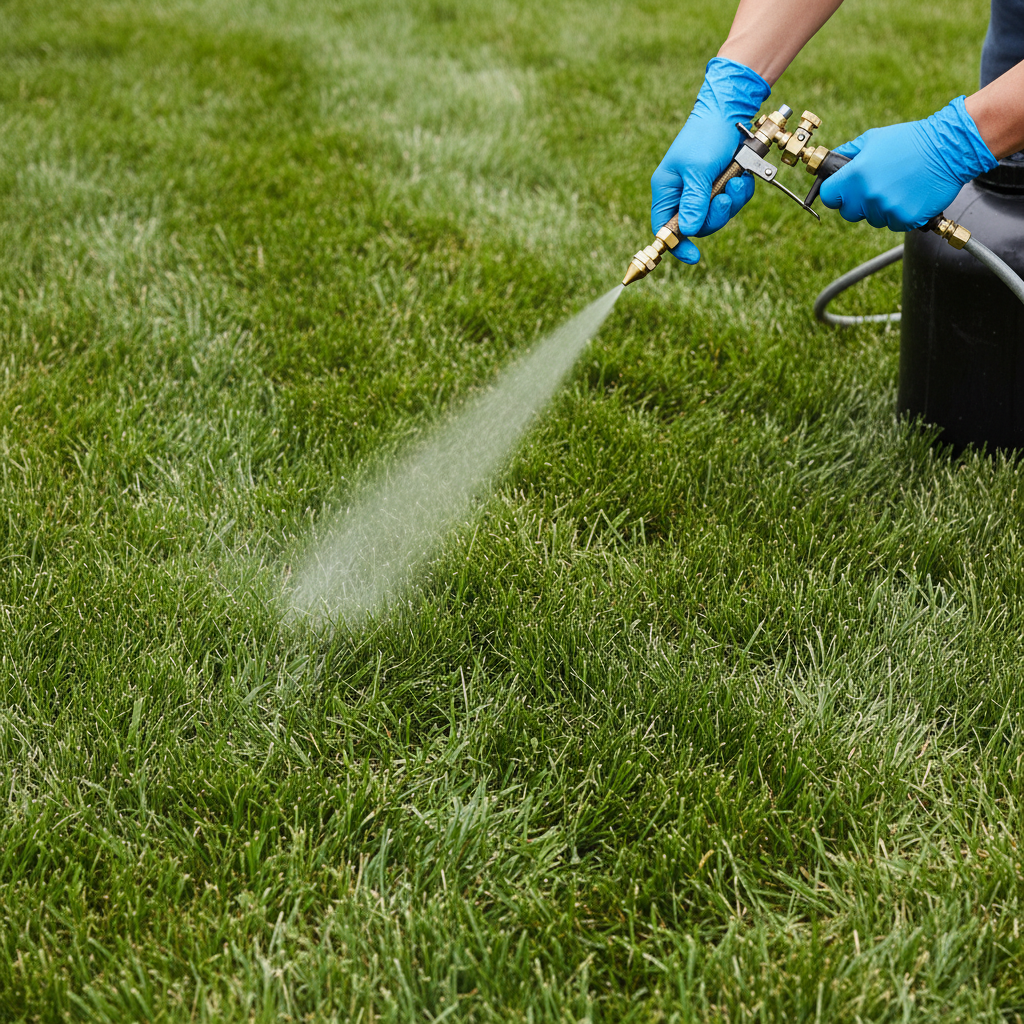
An effective fescue fertilizer schedule Tennessee homeowners should follow prioritizes nitrogen applications in September and November to establish strong roots and winter resilience. A supplemental application in early spring ensures lush growth and color before summer temperatures rise, helping cool-season grass thrive in local clay soils.
Maintaining a vibrant fescue lawn in Middle Tennessee often feels like a constant battle against heavy clay and unpredictable weather. Homeowners in Gallatin and Sumner County frequently struggle with thinning patches or nutrient runoff because generic lawn care advice fails to account for our specific soil composition. A mistimed application can do more than just waste money; it can actively stress your turf before the intense summer heat arrives. This guide provides a professional roadmap for local homeowners who want to take the guesswork out of their seasonal maintenance routine. You will learn the critical importance of the fall feeding window, how to navigate the spring wake-up call, and why stopping fertilizer in June is vital for fescue survival. From decoding N-P-K ratios to managing Tennessee clay, we are sharing the exact strategy used to keep local landscapes resilient and green.
Why Middle Tennessee Fescue Needs a Specific Feeding Strategy
Tall Fescue is the standard for residential lawns in Gallatin and Sumner County because of its deep root potential and year round green color. However, maintaining a lush stand in Middle Tennessee is challenging because we sit in the transition zone. This region experiences summers that are too hot for cool season grasses and winters that can be harsh enough to stress warm season varieties. Following a generic fescue fertilizer schedule Tennessee residents find on the back of a big box store bag often leads to disappointing results because those programs do not account for our specific local environment.
The primary factor is our heavy clay soil. While clay is excellent at holding onto nutrients, preventing the leaching often seen in sandy coastal soils, its density presents a significant hurdle. In areas like Hendersonville and Gallatin, clay soil compacts easily under foot traffic or heavy rain. This compaction creates a physical barrier that prevents fertilizers from reaching the root zone, where they are actually needed. Without addressing this through Aeration and Overseeding in Gallatin TN, nutrients often sit on the surface, leading to runoff rather than growth. A successful feeding strategy must balance the nutrient rich nature of clay with the practical challenges of soil density and transition zone weather.
The Gallatin Soil Factor: Managing Fertilizer on Tennessee Clay
Sumner County clay is characterized by its fine particle size and dense structure, which dictates exactly how we manage lawn nutrition. Unlike the sandy soils found in West Tennessee or along the coast, our local clay holds onto minerals with remarkable tenacity. However, this same density creates a drainage bottleneck. In many Gallatin neighborhoods, the underlying limestone shelf can cause soil pH to lean toward the alkaline side, while other pockets of the county remain naturally acidic. Because fescue thrives in a specific pH range of 6.0 to 7.0, applying fertilizer without knowing your soil chemistry is often a waste of resources. If the pH is too high or too low, the grass roots remain chemically locked out from absorbing the nutrients you provide.
We always recommend that homeowners start their fescue fertilizer schedule Tennessee by visiting the UT Extension office on West Main Street in Gallatin for a soil test. This inexpensive analysis identifies exactly what your lawn is missing, preventing you from adding phosphorus or lime that your soil might already have in abundance. Precision is particularly important here because clay soil does not absorb water rapidly. When a heavy rain hits a compacted lawn, excess fertilizer often washes off the surface before it ever reaches the root zone.
This runoff is not just a loss for your wallet; it is a significant concern for our local environment. Mismanaged applications often end up in Station Camp Creek or Old Hickory Lake, where high levels of nitrogen and phosphorus can trigger harmful algae growth. To protect our local waterways, we focus on split applications and slow-release products that give the dense clay enough time to process and store the nutrients for the fescue to use over time.
The Fall Window: September through November (The Most Important Phase)

September marks the beginning of the heavy hitter season for Sumner County lawns. While spring growth looks impressive, the autumn months are when the real work happens underground. In a professional fescue fertilizer schedule Tennessee homeowners should follow, roughly 75 percent of the lawn's total annual nitrogen requirement is applied between September and late November. This timing allows the grass to recover from summer heat stress and build a deep root system in our dense clay before the ground temperature drops significantly.
The first phase occurs in September, typically coinciding with Aeration and Overseeding in Gallatin TN. During this window, we utilize a starter fertilizer. Unlike standard maintenance blends, starter fertilizers are high in phosphorus, the middle number on the bag. Phosphorus is vital for early root development in new seedlings; it helps the young grass plants establish a firm anchor in the clay soil. However, because our clay soil already holds onto minerals well, phosphorus is rarely needed once the lawn is established. We limit its use strictly to this overseeding window to ensure the nutrients are used by the new growth rather than washing away.
The second phase, often called the winterizer application, takes place in November. By this point, the air temperature has dropped, but the soil remains insulated and active. We shift to a high nitrogen formula during this application. This serves two purposes. First, it encourages root expansion throughout the late fall when the grass is no longer under heat stress. Second, it provides the fescue with the stored energy necessary to maintain a vibrant green color during our typically mild Tennessee winters. While the vertical growth of the grass blades slows down, the plant continues to process this nitrogen, setting the stage for a much healthier and faster green up when the Gallatin spring arrives.
Early Spring Feeding: February and March Wake-up Call
After the November winterizer has done its job, the lawn enters a semi-dormant state until the late winter wake-up call. In Gallatin and the surrounding Sumner County area, soil temperatures typically reach a consistent 50 degrees by late February. This temperature is a critical biological trigger for Tall Fescue, signaling the plant to begin active root growth well before the spring canopy fully develops.
For this application, we prioritize a balanced fertilizer featuring a slow-release nitrogen source. Avoiding cheap, fast-release fertilizers is essential during this period. While high-nitrogen products provide an immediate, bright green color, they often cause a massive surge of top growth. This results in a lawn that requires mowing every three days, which puts unnecessary stress on the grass blades. A slow-release formula provides steady nutrition that builds plant strength rather than just leaf length.
This late winter feeding is also the ideal time to apply a pre-emergent herbicide. Dealing with crabgrass in Middle Tennessee is much easier when you prevent it from germinating in our dense clay soil. Following a consistent fescue fertilizer schedule Tennessee ensures your lawn has the nutrients it needs to recover from winter while remaining resilient as you adjust to the proper Tall Fescue Mowing Height Tennessee in the coming weeks.
The Bridge to Summer: April and May Maintenance
As we move into April and May, the focus of your fescue fertilizer schedule Tennessee shifts from encouraging growth to building resilience. This application serves as the final bridge before the intense Middle Tennessee summer heat arrives. Instead of heavy nitrogen, we prioritize potassium, the third number on the fertilizer bag. Potassium is essential for regulating water within the plant and strengthening cell walls, which helps the fescue survive the drought periods common in Sumner County.
Avoid the temptation of high nitrogen quick green fertilizers in late May. While these products provide a temporary aesthetic boost, they force the grass to produce lush, tender growth. This succulent new tissue is highly susceptible to Brown Patch fungus, a disease that thrives during our humid June nights when the air is stagnant. Because our clay soil retains moisture, excess nitrogen combined with trapped humidity creates a breeding ground for pathogens. To help the lawn process these nutrients safely, ensure you are Watering Your Gallatin Lawn the Right Way and maintaining a proper Tall Fescue Mowing Height Tennessee to keep the soil shaded and cool.
The Summer Danger Zone: Why We Stop Fertilizing in June
Once June arrives in Middle Tennessee, the primary objective shifts from feeding to survival. Tall fescue is a cool-season grass that naturally enters a state of semi-dormancy when temperatures consistently exceed 85 degrees. During this period, the plant intentionally slows its metabolism to conserve energy and moisture. Applying nitrogen in July or August is not just a waste of money; it is often lethal for your turf. Fertilizer forces the grass to produce new blades at a time when its root system is struggling to stay hydrated in our dense clay soil. This forced growth depletes the plant's internal carbohydrate reserves, leaving it exhausted and unable to withstand the peak heat of late summer.
Furthermore, excess nitrogen during humid Sumner County nights acts as a catalyst for Brown Patch fungus. This pathogen thrives on the tender, succulent growth produced by summer fertilization. A proper fescue fertilizer schedule Tennessee homeowners follow must respect these biological limits. Instead of reaching for the spreader, focus on maintaining a Tall Fescue Mowing Height Tennessee and Watering Your Gallatin Lawn the Right Way to help the lawn endure until the cooler September air returns.
Decoding the Numbers: Choosing the Right N-P-K for Sumner County
Understanding the three numbers on a fertilizer bag is essential for a successful fescue fertilizer schedule Tennessee homeowners can manage themselves. These numbers represent the percentage by weight of Nitrogen (N), Phosphorus (P), and Potassium (K).
Nutrient | Function for Fescue | Gallatin Soil Context |
|---|---|---|
Nitrogen (N) | Blade growth and green color | Needs steady supply without causing surges. |
Phosphorus (P) | Root development and establishment | Best used only during seeding in our clay. |
Potassium (K) | Stress and drought resistance | Crucial for surviving Sumner County summers. |
For established lawns in our area, we look for maintenance ratios like 3-1-2 or 4-1-2, such as a 16-4-8 blend. However, the delivery method is just as important as the analysis. Many liquid or cheap granular products use fast-release nitrogen, which dissolves instantly. On heavy clay, these often wash away during a heavy rain before the soil can absorb them.
Clayton’s prefers sulfur-coated or polymer-coated granular fertilizers. These slow-release options meter out nutrients over six to eight weeks, matching the slow absorption rate of local clay and providing a steady diet for the fescue rather than a temporary chemical spike that can burn the blades. This controlled release is particularly important when preparing for Aeration and Overseeding in Gallatin TN, ensuring the soil has a reservoir of nutrients available as new seedlings begin to emerge.
Synergy: How Mowing and Watering Impact Your Fertilizer Results

Applying the right product is only half the battle; the cultural practices you follow at home dictate how much of that investment actually benefits the turf. Mowing is the most frequent maintenance task, and it directly influences nutrient uptake. Maintaining a Tall Fescue Mowing Height Tennessee of 3.5 to 4 inches creates a dense canopy that shades the soil. This shade keeps the root zone cool and prevents the sun from baking the moisture and nutrients out of the clay. When you scalp a lawn, the soil temperature rises rapidly, which stresses the grass and limits its ability to process nitrogen.
Proper irrigation is equally critical for a successful fescue fertilizer schedule Tennessee. Granular fertilizers remain inert until they are dissolved. You must "water in" the application with approximately a quarter inch of water shortly after spreading. This moisture activates the granules and moves the nutrients into the top layer of the soil where the roots can access them. Without this step, fertilizer remains on the surface, where it can burn the grass blades or wash away during the next heavy Sumner County thunderstorm. Combining these habits ensures the nutrients from your Aeration and Overseeding in Gallatin TN and seasonal feedings are fully utilized rather than wasted. To master your irrigation timing, refer to our guide on Watering Your Gallatin Lawn the Right Way.